Thursday 5 November 2026

Good news, well told.

Get the newsletter
Heritage & Discovery

Ancient wall under Paris may pinpoint where the city began

A charred Iron Age rampart found beneath the old Hôtel-Dieu near Notre-Dame points to the Île de la Cité as the site of Gallic Lutetia.

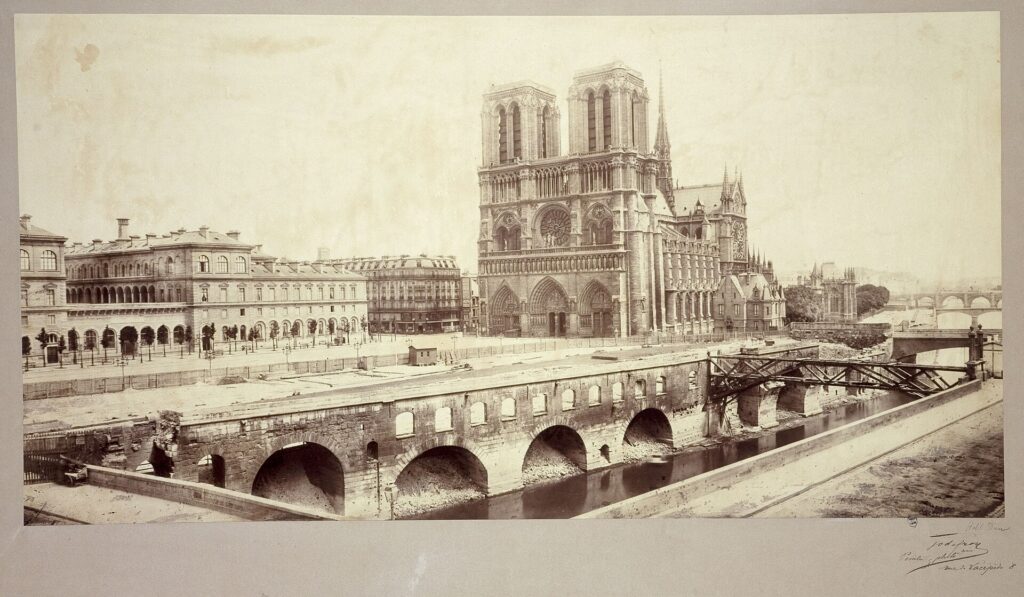
Photo: Godefroy, Henri Emile Cimarosa (Paris, 07–08–1837 - 19–09–1913), photographe, CC0, via Wikimedia Commons

Archaeologists in Paris have uncovered a wall that could settle a long-running debate about where the city was born, CBS News reports.

The stretch of stone-and-timber rampart, about 20 metres long, was found beneath the old Hôtel-Dieu hospital on the Île de la Cité, close to Notre-Dame, during building work. It is thought to be part of the defences of Lutetia, the settlement of the Gallic Parisii tribe. Traces of burning on the wall, carbon-dated to between 200 and 10 BC, may match Julius Caesar’s account of the Gauls setting fire to their town in 52 BC.

Historians have argued over whether Lutetia stood on the island or at Nanterre, to the west. France’s culture ministry called the find a major breakthrough, and it strongly supports the view that Paris began on the Île de la Cité.

Source: CBS News

Share this good news

Most read

  1. A rock found in the Sahara turns out to be one of the oldest pieces of Mars
  2. The Rubin Observatory finds a likely new dwarf planet far beyond Pluto
  3. Nine orangutans return to the forest in Indonesian Borneo
  4. A project will record the skills of the last maker of rapper swords
  5. A Melbourne choir brings more than 100 strangers together through Arabic song