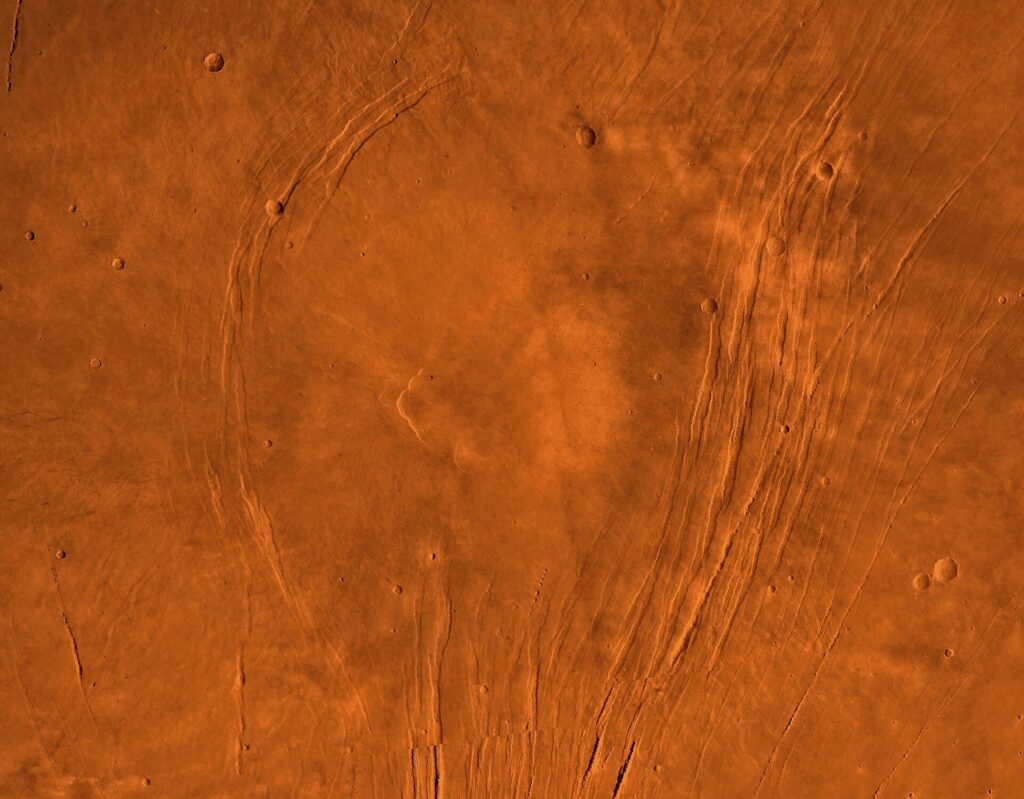
Mars may not be as geologically dead as scientists assumed, ESA reports. Its ExoMars Trace Gas Orbiter has detected hydrogen chloride gas coming from fresh fissures, some of them hundreds of metres long, on the slopes of the giant Alba Mons volcano. The findings were published in Science Advances.
The gas showed up in early northern summer, when ice that seals the cracks through the bitter winter turns to vapour. The research team, led by Alexander Trokhimovskiy, suspect the gas is rising from magma below the surface.
If that is right, Mars has kept more of its internal heat than expected, and places where warmth meets underground water could be promising spots to look for signs of life. The researchers are careful to call it a hypothesis, and no eruptions have been seen, but it gives future missions an exciting new target.
Source: European Space Agency