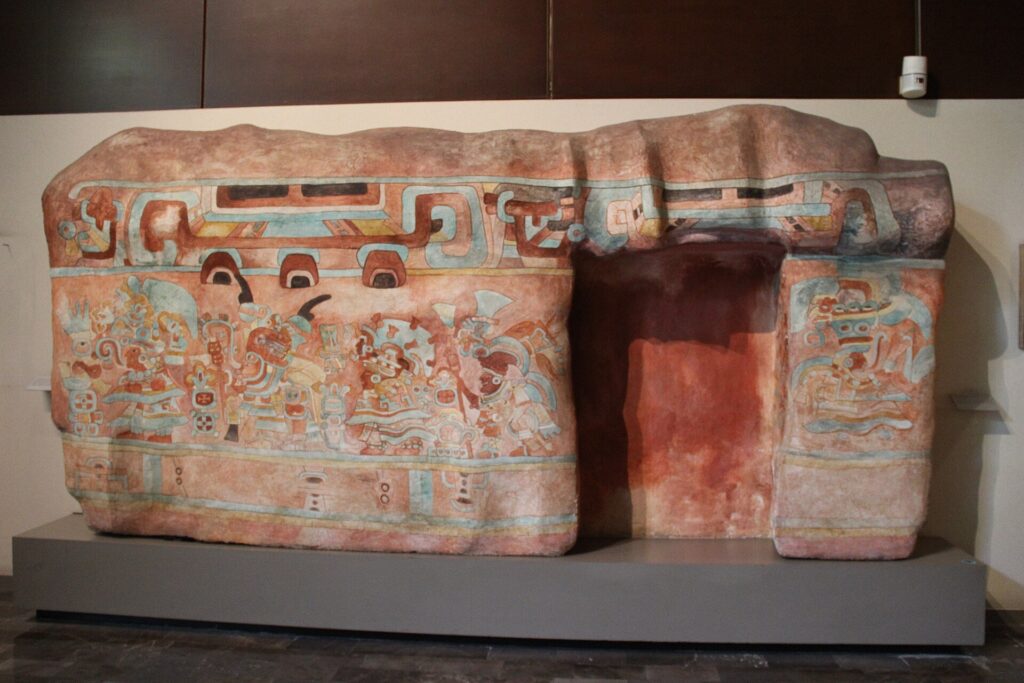
Archaeologists in the valleys of central Oaxaca have uncovered an intricately carved and painted Zapotec tomb dating to the early seventh century, Smithsonian Magazine reports. Mexico’s National Institute of Anthropology and History (INAH) revealed the find in the San Pablo Huitzo area, and President Claudia Sheinbaum called it the country’s most significant archaeological discovery in ten years.
The tomb is guarded by a massive owl sculpture, a creature the Zapotecs linked with death, and holds carved portraits of at least three people thought to be revered ancestors, along with engravings of their calendrical names. Its murals show a procession of figures carrying copal, a fragrant resin burned in ceremonies.
Because so much of the decoration survives, researchers have an unusually complete picture of how the Zapotecs honoured their dead some 1,400 years ago, and of the artistry of a civilisation that flourished in Oaxaca long before the Spanish arrived.
Source: Smithsonian Magazine