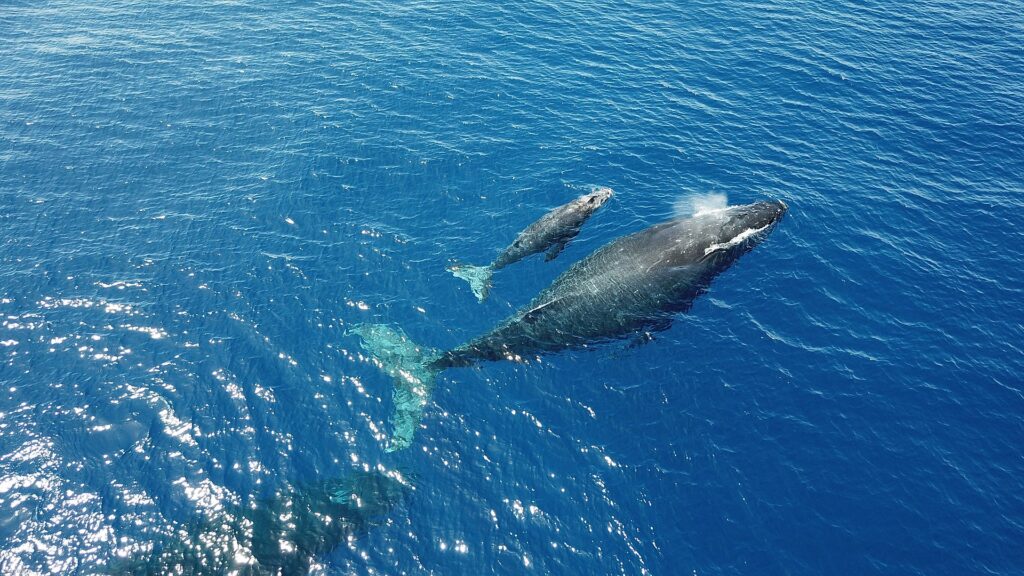
The world’s first treaty to protect ocean life in international waters now has 100 countries signed up. The milestone came during the UN General Assembly in New York last week, when Germany, Canada, Australia, Zimbabwe, Papua New Guinea and Brunei all formally ratified the agreement.
Half the planet, one set of rules
The High Seas Treaty covers the parts of the ocean that lie beyond any country’s borders. Together they make up nearly half of the Earth’s surface. Until now these waters have had no shared framework for protecting the whales, turtles, seabirds and countless other species that live in them.
The treaty changes that. It lets countries work together to create marine protected areas on the high seas, assess the environmental impact of new activities, and share marine resources fairly. It also commits richer nations to share training and technology with developing ones.
A year of momentum
The agreement took almost two decades to negotiate. It passed the 60 ratifications needed to become law in September 2025 and came into force in January this year. Reaching 100 parties just a year after crossing that threshold is a sign of how quickly support has grown.
The countries on board span every region of the world. They range from major maritime powers to small island nations, and include several landlocked countries with no coastline at all. Australia, which helped lead the negotiations, deposited its ratification overnight during the General Assembly’s high-level week. Its foreign minister, Penny Wong, said the high seas “belong to all of us”.
What comes next
The treaty’s first Conference of the Parties meets in January 2027. That is where member countries will start turning the agreement into real protected areas at sea. Ocean campaigners are already putting forward ideas, including a large sanctuary in the Tasman Sea between Australia and New Zealand. With every new country that joins, the ocean gains another voice at the table.
Sources: Positive News, High Seas Alliance, Australian Government, Australian Minister for Foreign Affairs.